Last Updated: October 25, 2026
Quick Summary
Residential tree maintenance service cost is the total a homeowner pays for professional trimming, pruning, removal, and health care, shaped by tree size and condition, access to the tree, labor and equipment required, and how often work is needed. Because these variables differ so much between properties, no single flat number applies.
- Size is the biggest cost driver, with trees above 60 feet demanding more crew, rigging, and time.
- Most residential trees benefit from trimming every two to three years, though fast-growing species may need annual attention.
- A written maintenance schedule is the best way to keep residential tree maintenance service cost predictable.
- A professional estimate should itemize scope, crew size, equipment, debris cleanup, site protection, and permits.
- Verify liability insurance and workers' compensation coverage before hiring any tree service.
What Drives Residential Tree Maintenance Service Cost
Residential tree maintenance service cost is the total amount a homeowner pays for professional trimming, pruning, removal, and health care, and it is shaped by four things: the size and condition of the tree, how easily crews can reach it, the labor and equipment required, and how often the work needs to happen. At Arbortech of Anderson, we have handled tree work across the Upstate since 2008, and the honest answer to "what will this cost me?" always starts with those variables rather than a single flat number.
Most homeowners get sticker shock because they compare a neighbor's small ornamental trim to a quote for a mature oak overhanging a roofline. Those are not the same job, and they should not carry the same price.
Tree Size, Height, and Canopy Spread
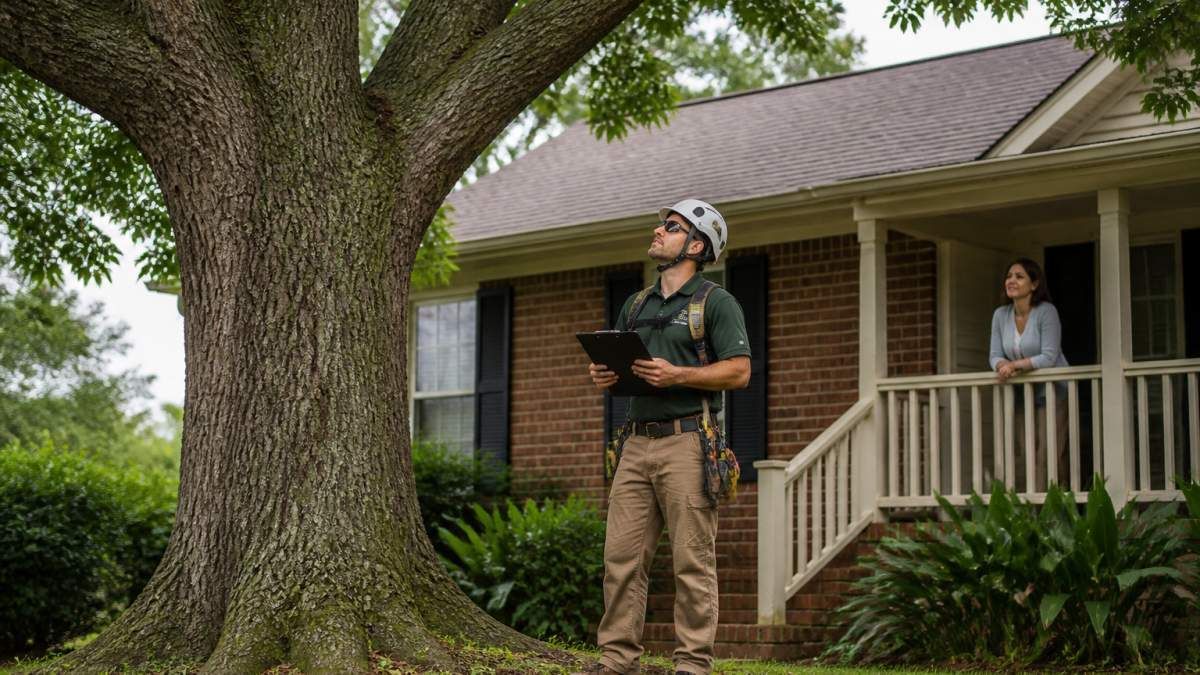
Size is the biggest cost driver. For a fuller pricing breakdown that shows how these cost factors translate into real numbers, see our average cost of tree trimming guide. A small tree under about 25 feet can often be handled with hand tools and a ladder. A medium tree in the 25 to 60 foot range usually needs climbing or a bucket truck.
Access, Proximity to Structures, and Power Lines
A tree in an open backyard is a straightforward job. A tree leaning over a garage, fence, or power line is a precision job. Crews must rig branches down in sections instead of dropping them, and that added care translates directly into labor hours. Tight driveways and gated yards slow equipment access too.
Labor, Crew Size, and Equipment
Tree work is labor-intensive by nature. More complex jobs require larger crews, and specialized equipment carries its own operating cost. Debris cleanup and brush hauling are part of that labor, not an afterthought.
Tree Trimming vs. Tree Pruning: What You Are Paying For
Tree trimming is the removal of overgrowth for clearance and shape, while tree pruning is the selective removal of dead, diseased, or crossing branches to improve tree health and structure.
Trimming tends to focus on sight lines, roof clearance, and keeping branches off structures. If you want to understand the pruning service itself so you can tell which one your property actually needs, our team can walk you through tree pruning and what it involves.
A common mistake is hiring for the cheapest trim and calling it maintenance. Repeated heavy trimming without proper pruning can stress a tree and create more problems down the road.
How Often Should Trees Be Trimmed?
Most residential trees benefit from trimming every two to three years, though fast-growing species and trees near structures may need annual attention. The right schedule depends on species, age, and how close the tree sits to your home.
Timing matters as much as frequency. You can also read our guide on when to schedule tree trimming in Belton for local timing guidance.
Building a Tree Maintenance Schedule That Controls Cost
A written maintenance schedule is the single best way to keep residential tree maintenance service cost predictable. Instead of reacting to problems, you plan inspections and trimming on a calendar and avoid emergency pricing.
Here is a simple schedule we recommend for most homes:
| Timeframe | Task | Why It Controls Cost |
|---|---|---|
| Spring | Health inspection and deadwood removal | Catches disease before it spreads |
| Early summer | Structural pruning on shade trees | Prevents storm-season failures |
| Fall | Clearance trimming near roof and lines | Avoids emergency storm calls |
| Annually | Full walkthrough with an arborist | Spots hazards early, before they get expensive |
Recurring maintenance plans spread work across the year and reduce the odds of a costly emergency. A tree that is inspected and pruned on schedule rarely becomes a hazard overnight.
What a Tree Service Estimate Should Include
A professional tree service estimate should itemize the scope of work, the crew and equipment required, debris cleanup, and any permits or utility coordination. If a quote is a single number on a business card, ask for the breakdown.
A complete written estimate typically separates the job into distinct line items so you can compare bids accurately and understand what you are paying for. Here is the structure to look for:
- Tree identification and scope. Each tree should be listed individually, with the specific work described, for example, "remove two dead limbs over the driveway" or "crown thin the oak in the front yard." Vague language like "trim trees" is a red flag because it leaves the actual work undefined.
- Labor and crew size. The estimate should indicate how many crew members are planned and roughly how long the job is expected to take. Labor is the largest cost component on most residential jobs, so this line matters more than any other.
- Equipment. Chippers, bucket trucks, cranes, and rigging gear all carry operating costs. A job that requires a lift or crane should say so, because that equipment is a major reason two quotes for similar trees can differ.
- Debris handling and hauling. Confirm in writing whether brush and wood are hauled away, chipped on site, or left behind. This is one of the most common sources of surprise charges.
- Site protection. Look for language about protecting lawns, driveways, fences, and landscaping during the work. A crew that plans for protection is a crew that plans for the property.
- Permits and utility coordination. Some work near public right-of-ways or utility lines may require coordination. The estimate should note whether any of that applies to your job.
- Insurance and licensing confirmation. A legitimate estimate will confirm the company carries liability insurance and workers' compensation coverage, and will provide a certificate of insurance on request.
Beyond the line items, ask each provider how they handle the unexpected. Trees hide defects, a hollow core, a split crotch, or rot near the base may only become visible once work begins. A trustworthy estimate will explain how change orders are handled if the scope shifts mid-job, and a trustworthy company will pause to discuss options rather than quietly adding charges.
It also helps to know what a fair estimate should not contain.
If you want quick answers to the questions homeowners ask most before hiring, our FAQs cover the details, and our team is always glad to walk through an estimate line by line so you understand exactly what you are approving.
Comparing Residential Tree Care Services Like for Like
Comparing tree care quotes fairly means matching the same scope across providers. One company may quote a trim, another a full prune, and a third removal.
The fix is to define each service in the same terms before you collect a single quote. Here is how the main residential maintenance services differ in scope, technique, and what drives their cost:
| Service | What It Involves | Typical Scope | Primary Cost Drivers |
|---|---|---|---|
| Clearance trimming | Removing growth for roof, siding, driveway, or sight-line clearance | Often limited to specific limbs or one side of the canopy | Number of cuts, proximity to structures, disposal of limbs |
| Structural pruning | Selective removal of dead, diseased, crossing, or weakly attached branches | Whole-canopy assessment, multiple targeted cuts | Tree size, canopy density, climb vs. lift access, arborist time |
| Crown thinning | Removing interior branches to improve light and airflow | Interior canopy work across the crown | Canopy volume, species, rigging needs |
| Crown reduction | Reducing height or spread while preserving structure | Careful, measured cuts across the outer canopy | Tree size, species response, rigging, crew skill |
| Hazardous limb removal | Taking down broken, hanging, or storm-damaged limbs | Targeted but high-risk work | Risk level, rigging, proximity to targets, urgency |
| Full tree removal | Dismantling or felling an entire tree | Whole tree, including cleanup | Height, lean, obstacles, rigging, hauling volume |
When you request estimates, ask every provider to describe the work using the same vocabulary. Which trees? Which specific cuts or removals? Is the work clearance trimming or structural pruning? Is the canopy being thinned, reduced, or both?
A second layer of comparison is what each quote includes beyond the cuts themselves. Debris hauling, site protection for lawns and driveways, and any coordination with utility companies can swing the total significantly. Two quotes for the same pruning job can differ by hundreds of dollars simply because one includes hauling and the other leaves the brush at the curb. Ask each provider to confirm inclusions in writing so the comparison stays honest.
Finally, compare the qualifications behind each quote, not just the number.
Verifying Insurance, Licensing, and Safety Before You Hire
Before you hire anyone, verify that the company carries liability insurance and workers' compensation coverage, and confirm the crew follows recognized safety practices. This protects you if something goes wrong on your property.
Ask for a certificate of insurance and check that it is current. A legitimate tree service will provide it without hesitation. If you have questions about hiring a tree service and want quick answers before committing, our FAQs cover the details homeowners ask about most.
Requesting Your Tree Care Estimate
The fastest way to get a real number is to request an on-site estimate. A walkthrough lets a crew assess tree size, access, and condition in person, which is the only way to price residential tree maintenance service cost accurately.
At Arbortech of Anderson, we send experienced crews with modern equipment to assess your trees and explain your options clearly. When you are ready to get a real estimate for your own property, reach out through our contact page.
Frequently Asked Questions
How much does residential tree maintenance cost?
There is no single rate because tree maintenance cost depends on tree size, height, canopy spread, condition, and how close the work is to structures or power lines. A small ornamental trim on an open lawn involves far less labor and equipment than a large tree overhanging a roof. The most reliable way to know your number is a written estimate after an on-site walkthrough. Arbortech of Anderson provides estimates for homeowners across the Upstate.
What should a tree service estimate include?
A solid tree service estimate names the specific work: which trees, which branches, and whether the job is trimming, pruning, or removal. It should state who handles debris cleanup and wood disposal, whether a chipper or crane is needed, and the expected timeframe. Ask whether the quote is flat-rate or hourly, what happens if the crew finds hidden decay, and confirm insurance and licensing in writing before any work begins.
How often should trees be trimmed?
Most mature shade trees benefit from trimming every two to three years, while fast-growing species may need attention annually. Fruit trees and ornamentals often follow their own cycle tied to bloom and dormancy. The right tree maintenance schedule depends on species, health, and how close the canopy sits to your roof or utility lines. A professional can set a realistic interval during an assessment rather than guessing from a calendar.
How can I compare tree service quotes fairly?
Compare quotes line by line, not just by the bottom number. Check that each one covers the same trees, the same scope of branch removal, debris cleanup, and disposal. A low quote that excludes hauling or uses a smaller crew is not the same job. Ask each provider to explain what drives their price: tree height, accessibility, equipment, and labor. Then verify insurance and licensing before signing anything.
Tree work is one of those projects that is easy to postpone until a storm forces the issue. If your trees have not been inspected in a few years, now is the time to act. Arbortech of Anderson offers professional tree trimming, hazardous tree removal, and storm damage cleanup backed by experienced crews and top-tier equipment. Get started with Arbortech of Anderson and protect your property with a maintenance plan built around your trees.