Inspections That Identify Risks Before Failure Happens
Tree Health Assessments in Anderson and across the Upstate for properties with mature trees showing signs of decline, structural weakness, or storm damage
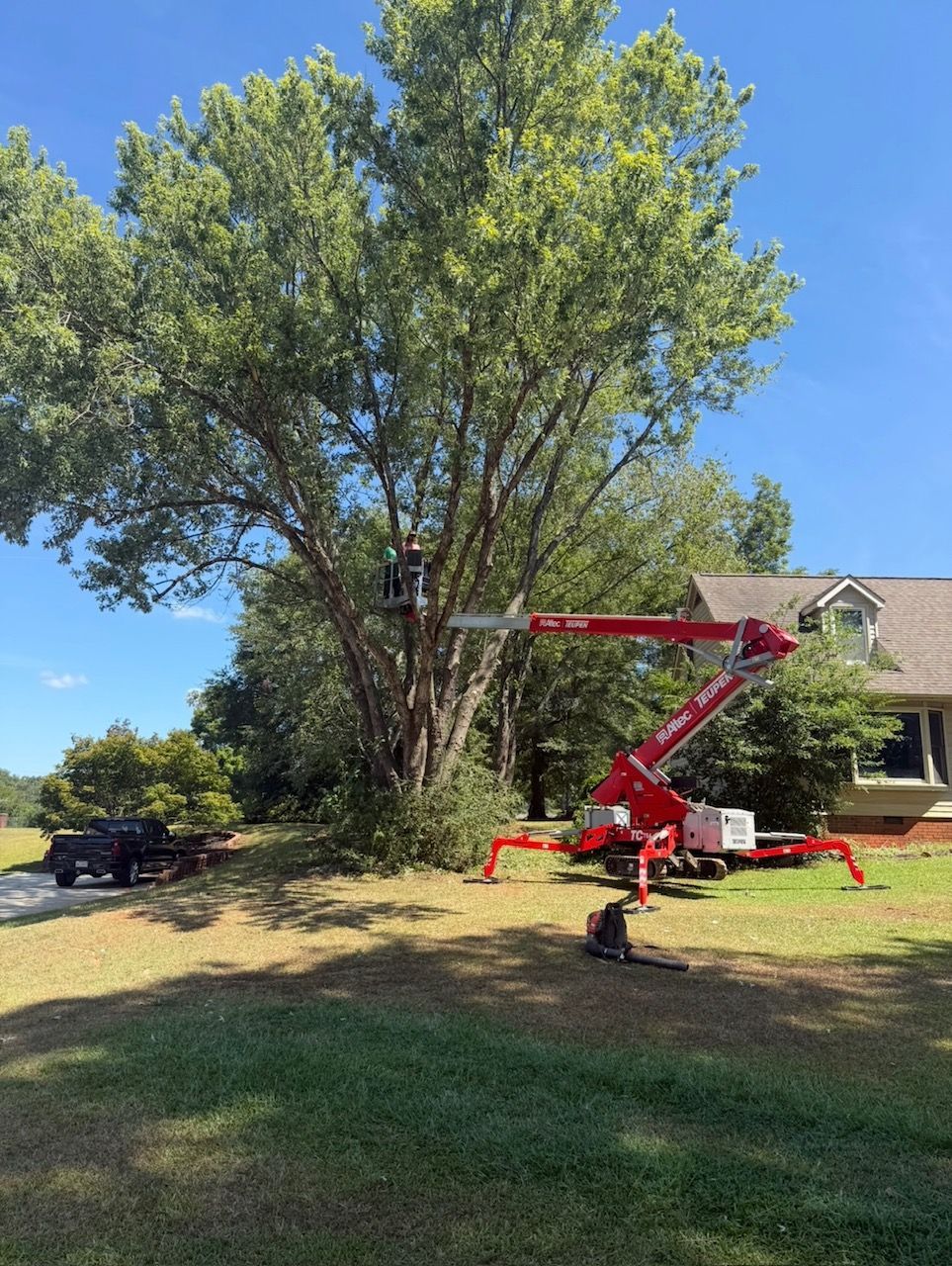
Trees develop hidden problems long before visible failure occurs, including internal decay, root damage, and structural imbalances that increase the likelihood of limb loss or complete collapse during storms. Arbortech of Anderson evaluates tree condition through detailed inspections that identify disease, insect activity, lean angles, dead wood, and factors affecting long-term stability. These assessments determine whether a tree requires pruning, cabling, treatment, or removal before it threatens structures, vehicles, or people below.
Inspections examine trunk integrity, canopy density, root collar condition, and attachment points where large limbs join the main stem, all of which reveal stress patterns and decay that compromise strength. Anderson's clay-heavy soils, seasonal thunderstorms, and periods of drought create conditions where root systems weaken and trees become susceptible to windthrow even when canopies appear healthy. Assessments catch declining health early when corrective action costs less and prevents emergency situations during severe weather.
Arrange an evaluation to review tree stability and health concerns before storm season begins in Anderson, Clemson, Simpsonville, and surrounding areas.
Why Early Detection Prevents Costly Damage
Assessments reveal whether trees need structural support, selective pruning to reduce wind resistance, or complete removal before failure damages property. Inspectors look for fungal fruiting bodies that indicate internal rot, cracks in the trunk that signal splitting risk, and root exposure that suggests instability in the soil. These indicators aren't always obvious to property owners but become critical during high winds or ice loading when compromised trees fail suddenly.
Once the inspection is complete, you receive specific recommendations tailored to each tree's condition, including priority rankings for work that addresses immediate hazards versus long-term health improvements. Properties with multiple mature trees benefit from phased plans that spread costs over time while focusing first on specimens posing the greatest risk to buildings, driveways, or utility lines. Arbortech of Anderson provides written reports that document findings and guide decisions about which trees require intervention and which remain stable with routine monitoring.
Recommendations account for local factors such as soil type, storm frequency, and site-specific stressors like construction damage or irrigation changes that affect root health. Assessments also identify opportunities to improve tree longevity through targeted treatments, mulching, or canopy management that reduces stress and extends the functional life of valuable landscape specimens. Commercial property managers use these evaluations to maintain compliance with liability standards and prevent hazards before tenants or customers are affected.
Common Questions About Tree Health Evaluations
Property owners managing mature trees need clarity on what inspections reveal and how findings translate into actionable next steps.
Arbortech of Anderson provides thorough inspections that identify risks and guide treatment decisions for residential and commercial properties. Call to schedule an assessment that protects your property and clarifies which trees require attention.
What signs indicate a tree needs professional evaluation?
Leaning trunks, large dead limbs, fungal growth at the base, thinning canopy, cracks in bark, and exposed roots all signal potential structural or health problems that require inspection to determine severity and necessary action.
How do soil conditions in Anderson and throughout the Upstate affect tree stability?
Clay soils common across the Upstate expand and contract with moisture changes, which stresses root systems and contributes to leaning or uprooting during storms when saturated ground loses its grip on root masses.
What happens during a tree health assessment?
Inspectors examine the trunk for decay, check limb attachments for weakness, evaluate the root collar for girdling or damage, assess canopy density for decline, and look for insect or disease activity that compromises structural integrity.
Can assessments prevent the need for tree removal?
Early detection often allows corrective pruning, cabling, or treatments that extend tree life and avoid removal costs, though some conditions like advanced decay or severe lean require removal to prevent property damage.
When should assessments be scheduled?
Evaluations are most effective before storm season begins or after severe weather events that may have caused hidden damage, and routine inspections every few years help monitor changes in mature trees over time.