
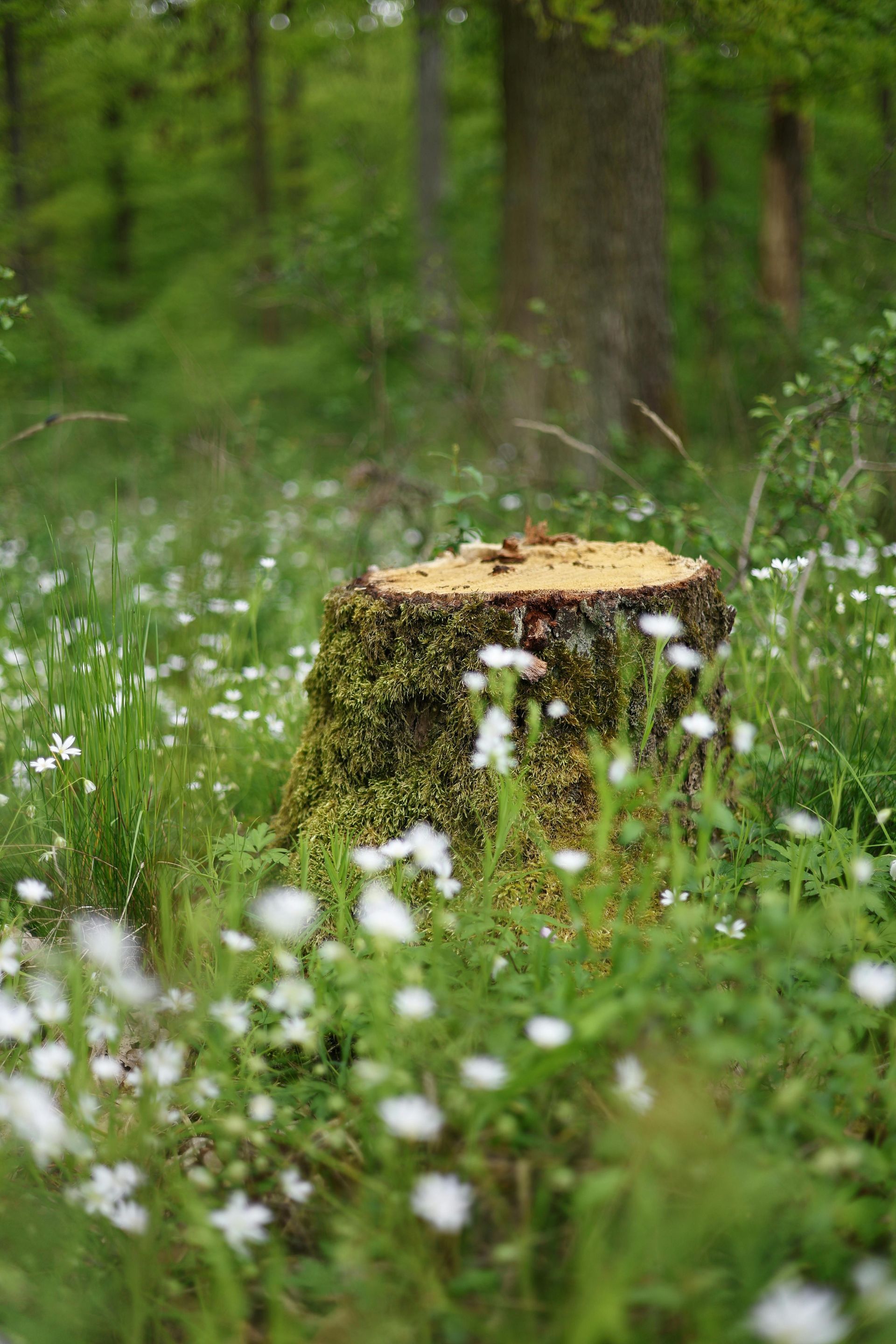
Remove What's Left After the Tree Comes Down
Stump Grinding in Anderson and surrounding areas for properties with leftover stumps blocking landscaping plans or creating tripping hazards
Old stumps scattered across your yard prevent new plantings, collect insects, and create uneven surfaces that complicate mowing and property maintenance. Arbortech of Anderson removes these remnants completely through grinding, turning the stump into mulch and eliminating the root mass below ground level. Grinding clears the area for sod installation, garden beds, patio construction, or simply restores usable lawn space where the stump once sat.
The process involves cutting the stump down several inches below the soil surface using specialized grinding equipment that chips away wood and roots without tearing up surrounding grass or damaging adjacent hardscaping. Wood chips left behind can be removed or spread as natural mulch depending on your landscaping goals. Grinding stops regrowth from dormant roots and prevents carpenter ants, termites, and wood-boring beetles from establishing colonies in decaying wood.
Schedule a property walkthrough to evaluate stump locations and grinding requirements for your site in Anderson, Greenville, Easley, and surrounding areas.
What Happens After the Stump Is Gone
Once grinding is complete, you're left with a level surface where the stump used to sit, filled with fine wood chips that decompose naturally over time. The area can be seeded, sodded, or planted immediately after chip removal, and mowing paths become continuous without needing to navigate around protruding stumps. No more tripping hazards along walkways or uneven ground that catches mower blades.
Grinding removes the entire visible stump and grinds roots down far enough that they no longer sprout new growth or interfere with construction projects. You'll notice insect activity around the old stump stops once the decaying wood is removed, and the space opens up for functional use rather than remaining an obstacle in the middle of your yard. Properties preparing for patio installation, driveway extensions, or new landscaping beds require this step before any construction begins.
Cleanup includes hauling away chips if requested or spreading them evenly across planting beds where they break down into organic matter. Some property owners use the chips as mulch around trees and shrubs, while others prefer complete removal to prepare for turf restoration. Grinding depth typically extends six to twelve inches below ground level depending on future site use and whether roots need clearing for underground utilities or foundation work.
Questions Property Owners Ask About Stump Removal
Stump grinding addresses concerns about property usability, safety, and long-term maintenance after tree removal work is finished.
Arbortech of Anderson removes stumps efficiently across residential and commercial properties where leftover remnants block landscaping progress or create ongoing maintenance problems. Contact us to arrange grinding services that clear your property for its next use.
How deep does grinding go below the surface?
Grinding typically removes the stump six to twelve inches below ground level, which stops regrowth and clears enough depth for sod, seed, or shallow landscaping installations without roots interfering.
What happens to the wood chips left after grinding?
Chips can be removed entirely, spread as mulch in garden beds, or left to fill the void where the stump was located depending on your landscaping plans and whether you need a clean surface for construction.
Will grinding damage nearby grass or landscaping?
Equipment is sized to access the stump with minimal disruption to surrounding turf, and careful operation prevents rutting or tearing up adjacent lawn areas even when working close to flower beds or hardscaping.
Why do stumps need removal instead of just cutting them flush?
Stumps left in place continue sprouting new shoots from dormant roots, attract wood-damaging insects, and decay slowly over years while occupying usable space that could support new plantings or construction.
When should stump grinding happen after a tree is removed?
Grinding can occur immediately after tree removal or months later depending on your schedule, though prompt removal in Anderson prevents root sprouting during the growing season and clears the site before landscaping projects begin.