
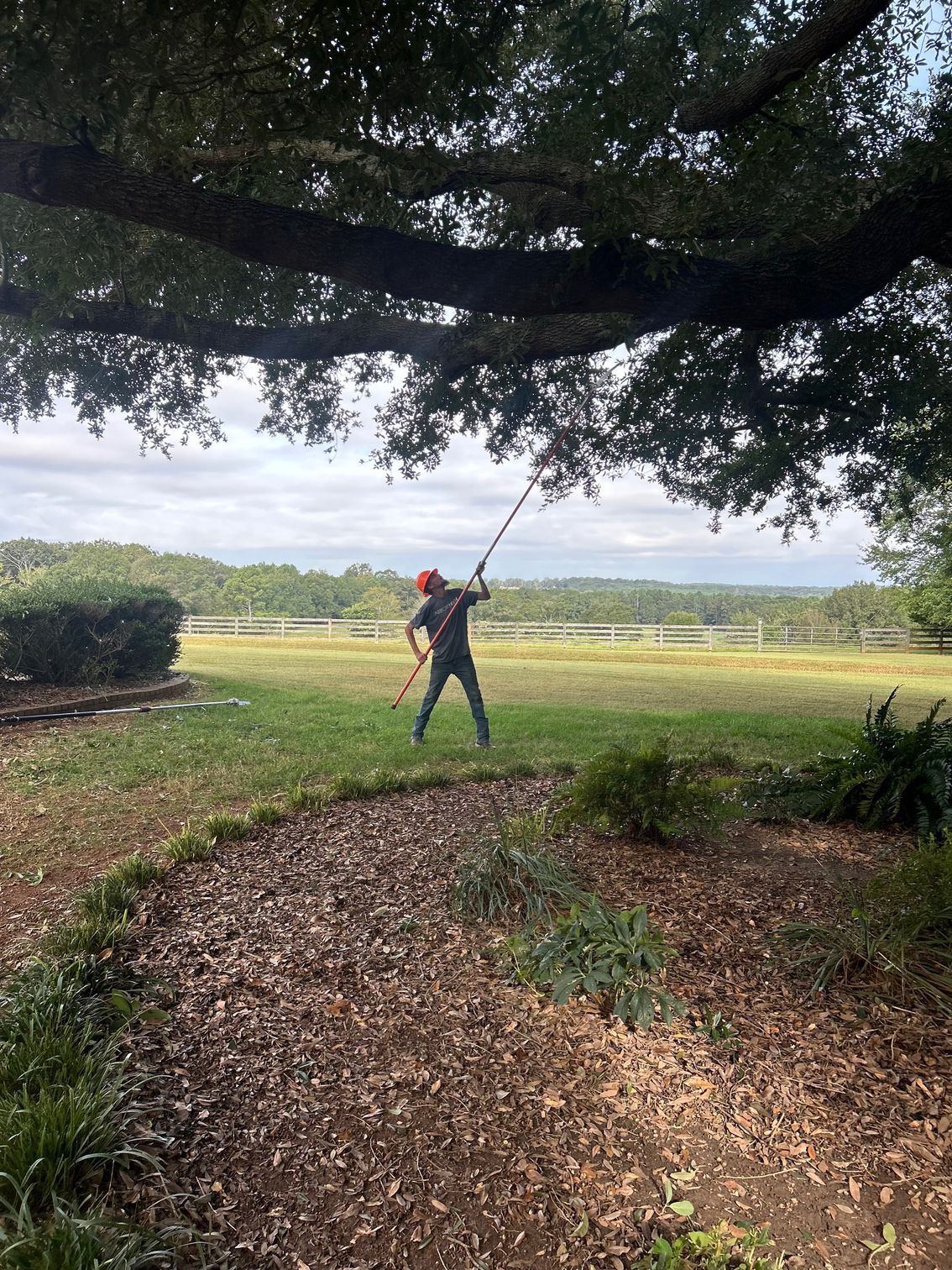
Clear Space and Reduce Storm Risk
Tree Trimming in Anderson and throughout the Upstate of south Carolina for overgrown branches threatening roofs, vehicles, and structures during seasonal growth
Heavy foliage and rapid seasonal growth in Upstate South Carolina cause branches to extend over roofs, driveways, and sidewalks within a single growing season. Trimming services from Arbortech of Anderson remove overgrown, low-hanging, and storm-damaged branches around homes and businesses, improving sunlight exposure and reducing wind resistance that causes limbs to break during storms. Properties regain clear access and protected structures once problem branches are cut back and debris is removed from lawns, driveways, and landscape beds.
The work focuses on branches scraping shingles, blocking gutters, or hanging low enough to obstruct walkways and vehicle clearance. Cuts are made at proper angles and locations to promote healthy regrowth while preventing disease entry points or unsightly stubs. Airflow through dense canopy sections improves after thinning, reducing humidity that encourages fungal growth and decreasing the surface area that catches wind during storms.
Arrange a property evaluation to identify branches requiring removal before they damage roofs or block access points in Anderson, Clemson, Greenville, and surrounding areas.
What Proper Trimming Accomplishes
Trimming removes specific branches while leaving the tree's overall structure and health intact, unlike topping or excessive cutting that stresses trees and creates weak regrowth. Branches extending toward power lines, touching building exteriors, or hanging over parking areas are cut back to laterals or the main trunk using clean cuts that heal properly. Seasonal timing accounts for when cuts will cause least stress, with most trimming performed during dormancy or after spring growth hardens off.
You notice roofs remain clear of abrasive contact during wind, gutters collect less leaf debris, and vehicles park without low limbs scraping paint or obstructing mirrors. Sunlight reaches shaded lawn areas and gardens that were previously dim, encouraging healthier turf growth and better flowering in landscape beds. Sight lines improve at driveway entrances where branches previously blocked visibility, and outdoor living spaces become more usable without constant ducking under low growth.
Trimming does not address internal tree health issues such as disease, decay, or structural defects in the trunk, which require pruning or removal depending on severity. Regular trimming schedules prevent branches from becoming large enough to cause significant damage if they break, maintaining manageable tree size and shape over years rather than requiring drastic reduction cuts later. All cut branches and foliage are chipped or hauled away after work finishes, leaving properties clean and immediately usable.
What Property Owners Ask About Trimming
Homeowners and businesses across Anderson and neighboring communities want to know when to trim, what gets removed, and how trees respond to cutting.
Arbortech of Anderson assesses branch position, tree health, and property protection needs before trimming begins. Request a maintenance schedule to keep your trees safely managed throughout the year.
How often should trees be trimmed on residential properties?
Most trees benefit from trimming every two to three years depending on species and growth rate, with faster-growing varieties requiring more frequent attention to prevent overgrowth near structures and utilities.
What is removed during a typical trimming service?
Overgrown limbs extending beyond the desired canopy, branches hanging lower than eight feet over walkways, dead or damaged wood, and growth touching or threatening roofs, fences, and power lines are cut back to appropriate points.
Why does trimming improve storm resistance in Anderson and throughout the upstate?
Reducing canopy density and removing long, unsupported branches decreases wind load and eliminates weak growth most likely to break during the high winds and thunderstorms common throughout Upstate South Carolina's spring and summer months.
What happens if trimming cuts are made incorrectly?
Improper cuts create entry points for decay, leave unsightly stubs that die back, or stimulate excessive sprouting that requires additional corrective work and increases long-term maintenance needs.
How much of a tree can be safely trimmed at once?
Generally no more than twenty-five percent of living canopy should be removed in a single season to avoid stressing the tree, with larger reductions phased over multiple years when significant size reduction is needed.