Eliminate Hazards Before Damage Occurs
Tree Removals in Anderson and surrounding areas for dead, storm-damaged, or leaning trees threatening homes, garages, and utility lines
Dead trees lose structural integrity as internal decay spreads, creating collapse risks during high winds or heavy rain common across the Anderson, Greenville, Simpsonville, and surrounding areas. Arbortech of Anderson removes hazardous, storm-damaged, and unwanted trees from residential and commercial properties using controlled methods that protect homes, fences, driveways, and underground utilities during the cutting and lowering process. You prevent future structural damage and eliminate safety concerns once unstable trees are sectioned, rigged down, and hauled away with complete debris cleanup.
Planning begins with assessment of surrounding structures, overhead wires, and ground conditions that affect how sections are cut and where they can safely land. Specialized rigging equipment lowers large limbs and trunk sections in controlled descents rather than allowing freefall that could damage roofs, vehicles, or landscaping below. Local storm conditions including lightning strikes, ice accumulation, and tornado-force winds frequently weaken trees by splitting trunks, exposing roots, or snapping major scaffold branches.
Request an inspection for any tree showing lean, exposed roots, or large dead sections visible in the canopy.
What Safe Removal Requires
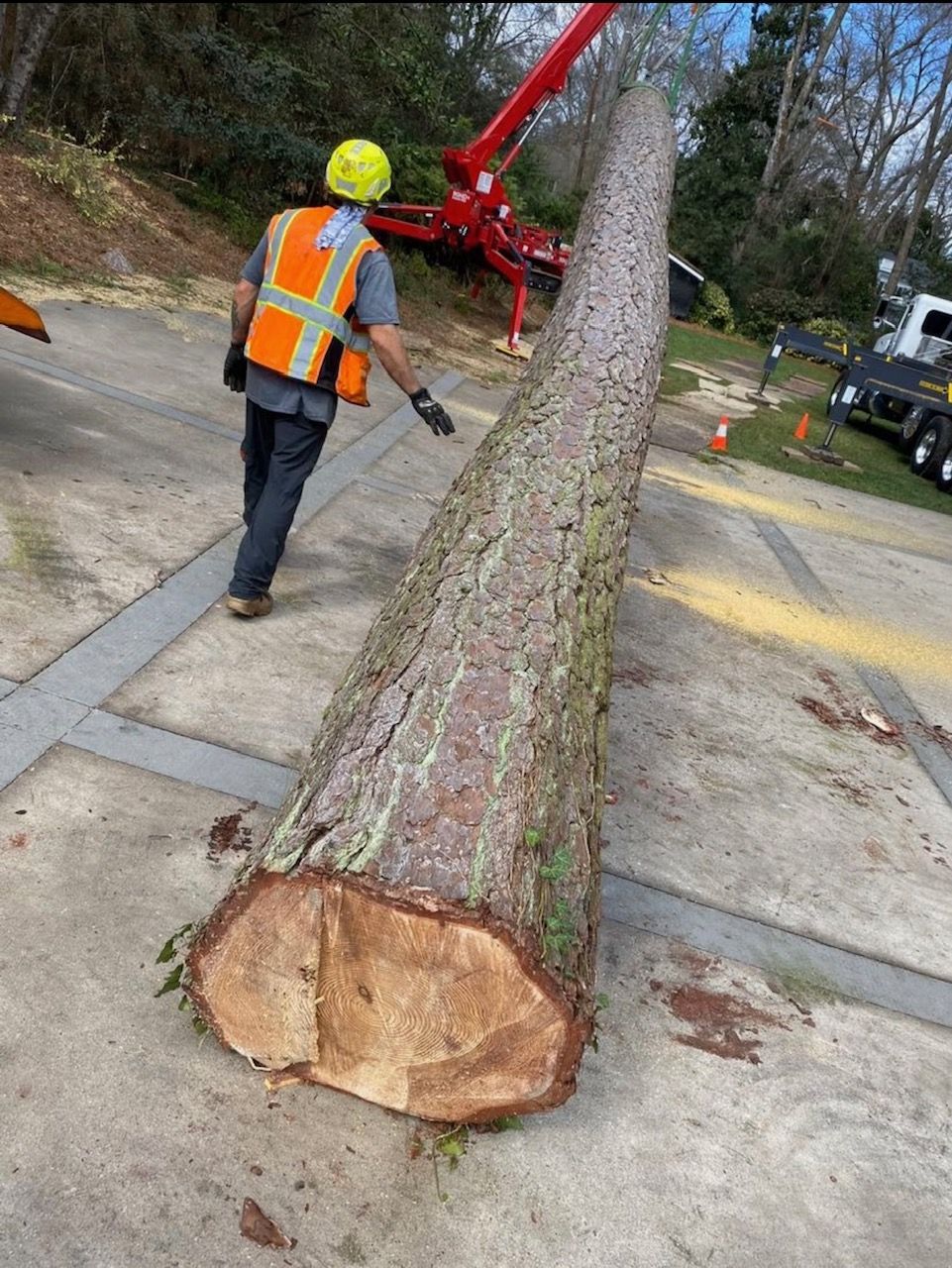
Removal work involves cutting trees in sections from top to bottom when proximity to structures prevents felling the entire trunk in one piece. Climbers ascend and remove upper limbs first, then cut the main trunk into manageable lengths that are lowered by rope to designated landing zones away from buildings, fences, and plantings. Ground crews guide each section during descent and immediately process wood into transportable pieces, keeping work areas clear for the next cut.
Once the tree is down, you notice immediate elimination of the lean threatening your home, the dead canopy that dropped branches during every storm, or the overgrown trunk that blocked sunlight and crowded your driveway. Stump grinding can follow removal to eliminate the remaining root structure, allowing you to replant, extend lawn areas, or install hardscaping without obstruction. Properties regain usable space and safety margins around structures that were previously at risk from falling limbs or complete tree failure.
All wood, branches, and debris are hauled from your property after removal finishes, leaving the site ready for landscaping or construction without additional cleanup required. Difficult removals near power lines are coordinated with utility companies when necessary, and bucket trucks or cranes provide stable platforms for cutting in tight spaces between buildings or over fences. Emergency storm damage removals address trees that have already fallen or are partially uprooted, securing your property and clearing access routes blocked by downed trunks.
Answers Homeowners Need Before Removing Trees
Removal decisions depend on understanding what makes a tree unsafe, how the work is completed without damaging your property, and what happens afterward.
Arbortech of Anderson evaluates tree condition and surrounding risks before recommending removal or alternative treatments. Schedule an assessment to address leaning or damaged trees before they fail.
What signs indicate a tree needs removal rather than trimming?
Extensive dead branches throughout the canopy, visible trunk decay, significant lean toward structures, exposed or severed roots, and large splits or cracks in the main trunk all signal structural failure risks that pruning cannot address.
How are trees removed without damaging my driveway or landscaping?
Rigging systems lower cut sections along controlled paths to designated landing zones, while ground protection mats prevent equipment from compacting soil or cracking pavement during wood processing and removal.
Why do storm-damaged trees in Anderson and surrounding areas require urgent removal? do you ensure lasting results?
High winds and lightning strikes common in Upstate South Carolina create partially failed trees with cracked trunks or hanging branches that can collapse unexpectedly, threatening injury or additional property damage until fully removed.
What happens to the wood after removal?
All debris including logs, branches, and foliage is hauled away and processed off-site, with larger trunk sections available for firewood upon request if you want to keep select pieces.
How long does a typical residential tree removal take?
Single trees near structures usually require four to eight hours depending on size and proximity to obstacles, while isolated trees in open yards may be removed more quickly using conventional felling techniques.