Last Updated: October 20, 2026
Why Residential Tree Trimming Matters in Anderson, SC
Tree trimming Anderson homeowners can count on protects the two things they value most: the house and the trees around it.
That distinction matters more here than in most places. Upstate summers feed heavy growth, and the region's thunderstorms and occasional ice events test every limb overhanging a roof, driveway, or power line. A hardwood left untrimmed for years accumulates deadwood, weak branch unions, and low limbs that fail under wind load.
Below, we break down what professional trimming includes, how to spot a tree that needs pruning before damage starts, when to schedule the work, what an estimate should reflect, and how to check that the crew you hire is properly insured.
Tree Trimming and Pruning Services for Local Homes
Tree trimming and pruning are related but not identical. Trimming is the removal of growth for clearance and shape, such as branches over a roof, driveway, or walkway. Pruning is deliberate cutting to improve a tree's structure and health, removing deadwood, crossing limbs, and weak attachments.
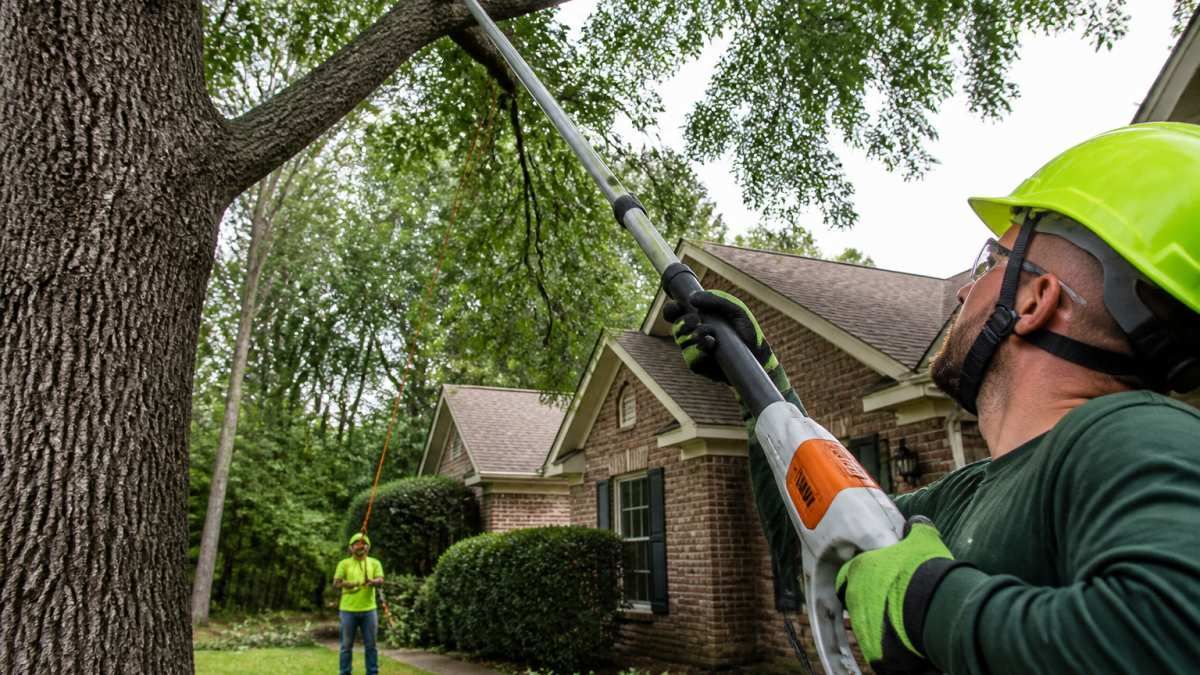
For most local homes, a professional visit covers both. Our crews work with top-tier modern machinery and follow safe, thorough practices on every property, from a single river birch by the patio to a dozen hardwoods along a fence line.
What a Professional Trimming Visit Includes
A complete visit typically follows a set sequence:
- Assessment first. The crew lead walks the property, identifies which trees need work, and flags hazards like cracked limbs or lean.
- Clearance cutting. Limbs overhanging the roof, siding, driveway, and service lines come off first.
- Structural pruning. Deadwood, crossing branches, and weak unions are removed to improve form.
- Controlled lowering. Rope and rigging keep cut limbs from dropping onto lawns, beds, or structures.
- Cleanup and haul-away. Brush and debris leave with the crew, and the work area gets raked.
Ask any provider whether cleanup and debris removal are included, because that answer changes the scope of the job.
Signs a Tree Needs Pruning Before Damage Starts
A tree usually signals its problems well before a limb fails. Here are the signs we check most often:
- Deadwood in the canopy. Bare branches that stay bare through spring are dead and become falling hazards.
- Crossing or rubbing branches. Bark worn away where limbs grind together invites decay.
- Low limbs over structures. Anything within reach of a roof or gutter needs clearance.
- Weak branch unions. Two trunks or limbs growing from one point with included bark form a failure point.
- Sudden lean or cracks. A new lean or a visible split in the trunk means call an arborist promptly.
- Dense interior growth. Thick, shaded interior branches reduce airflow and invite disease.
If you spot several of these at once, don't wait for storm season to schedule tree trimming Anderson crews can handle early. Trimming scheduled early is almost always simpler and less disruptive than emergency work after a failure.
When to Trim Trees in the Upstate's Climate
Late winter is the safest window for most structural pruning in the Upstate. Trees are dormant, the bare canopy makes defects easier to see, and cuts heal quickly once spring growth begins. Timing still depends on the species and the reason for the work.
A few practical guidelines:
- Dormant-season pruning (late winter): Best for most hardwoods and for major structural cuts.
- After flowering: Best for ornamental trees that bloom in spring, so you don't cut off the season's flowers.
- Deadwood removal: Fine any time of year, since dead limbs are a hazard regardless of season.
- Storm-damaged limbs: Remove immediately to prevent further tearing and to protect the wound.
Avoid heavy pruning during the hottest, driest stretch of summer, when trees are stressed. Light clearance work is usually fine, but major cuts are better saved for dormancy.
What the Average Cost of Tree Trimming Reflects
The average cost of tree trimming varies widely because the job varies widely. Two homes on the same street can see very different quotes. What matters is understanding which factors drive the number so you can judge whether a quote is reasonable and compare two bids on equal footing.
Here is how each factor changes the work:
- Tree size and height. A tree under about 30 feet can often be worked from the ground or a short ladder with pole saws. Once a canopy passes roughly 40 to 50 feet, the crew is climbing or using an aerial lift, rigging limbs down in controlled pieces, and spending far more time per cut, and height raises the skill level required.
- Access and proximity. A tree in an open back yard lets the crew drop limbs in a safe zone. A tree hemmed in by a fence, shed, pool cage, or power line forces rigging and piece-by-piece lowering, slower, more careful work. Narrow gates and soft lawns add handling time.
- Scope of work. Light clearance trimming (a few limbs over a roof or driveway) is a short visit. Full structural pruning, deadwood removal, thinning, and corrective cuts, takes longer and produces more debris. The two should never be priced as the same job.
- Crew size and equipment. A small clearance job may need a two-person crew. Larger or riskier trees may need more hands on the ground, a climber, and heavier rigging. Equipment and labor scale together.
- Debris handling. Haul-away and disposal add to the job compared with leaving cut brush on site. Chipping, loading, and disposal take time and truck space, so confirm whether debris removal is included before comparing numbers.
- Condition and risk. Hazardous trees, storm damage, dead or split limbs, and tight quarters all raise complexity. A failing tree is slower and more dangerous to work than a healthy one.
- Timing and demand. After a storm, demand spikes across the Upstate and schedules tighten. Scheduling routine trimming in a quieter season is usually simpler than waiting until everyone is calling at once.
Request a free estimate so the crew can assess your trees in person and give you a clear scope. Then ask which of the factors above apply to your property, a provider who can walk you through them has actually looked at the job.
How to Evaluate a Tree Trimming Estimate
A good estimate is more than a total at the bottom. It should tell you what's being done, to which trees, and what happens to the debris. Use this checklist when comparing quotes:
- Does the estimate list each tree or area to be trimmed?
- Is the scope described in plain terms (clearance, deadwood, structural pruning)?
- Is debris removal and haul-away included or extra?
- Is there a stated start window and expected duration?
- Does it name who will be on site and whether an arborist assesses the work?
- Is the provider's insurance information available on request?
- Are cleanup and property protection (beds, fences, driveways) addressed?
If two quotes differ sharply, compare the scope line by line before comparing price. A lower number that excludes haul-away or limits the work isn't really lower. Ask each provider to explain what's included.
Licensing, Insurance, and Credentials to Verify
Before any crew touches your trees, verify three things: insurance, credentials, and references.
Insurance, ask for the certificate, not a promise. Request a certificate of insurance (COI) showing general liability coverage.
Workers' compensation, ask separately. General liability covers property damage; workers' compensation covers crew injuries. These are different policies.
Credentials, ask who assesses the work. Ask whether the work is assessed by a qualified arborist and whether the crew follows industry tree-care standards. Professional arborists in the U.S. are often credentialed through the International Society of Arboriculture, and you can check ISA's credential verification guidance to confirm a claim.
References, ask for recent, local ones. Ask for references from jobs in the past few months, ideally in the Anderson area.
Written agreement, get the scope, price, and timeline in writing. A clear contract protects both sides.
A quick red-flag list to keep in mind:
- No certificate of insurance available on request, or a certificate that has expired.
- A quote given only over the phone with no site visit.
- Pressure to pay a large deposit in cash before any work begins.
- No written scope, or a scope that says only "trim trees."
- A crew that arrives without the equipment or crew size the quote described.
For broader consumer guidance on hiring home service providers and what to confirm before signing, the FTC's consumer advice on home service contracts is a useful starting point.
Emergency Trimming and Storm Damage Response
Storms don't schedule appointments. When a limb comes down on a roof, blocks a driveway, or hangs over a power line, the priority shifts from appearance to safety. Here's how to respond:
- Keep people clear. Stay away from downed limbs near power lines and call the utility first.
- Document the damage. Photograph the tree and any structural damage for your insurance claim.
- Call for emergency response. A crew trained in storm work can assess hanging limbs and remove them safely.
- Don't attempt the cut yourself. Partially fallen trees are unpredictable and a common source of serious injury.
Our emergency tree services and storm damage cleanup are built for exactly this scenario. We've handled storm response across the Upstate since 2008, and we know how to prioritize hazards, protect structures, and clear debris so your property is usable again.
Many homeowners ask whether a smaller job, like trimming a couple of trees, is worth calling a professional crew for. It is. Small jobs handled safely prevent larger emergency calls later, and a free estimate tells you exactly what's needed.
If your trees are overdue for trimming, or a storm has left you with limbs down and debris to clear, don't wait for the next round of weather.
Frequently Asked Questions
How much does residential tree trimming typically cost?
The average cost of tree trimming depends on tree height, canopy spread, how close the tree sits to your house or power lines, and whether a bucket truck can reach it or a climber is needed. A single small ornamental costs far less than a large hardwood over a roof. Two-person crews, fixed fees, and hourly rates all appear in quotes, so ask what each line covers. Arbortech of Anderson provides free estimates so you get a written scope before any work begins.
What are the legal rules about trimming trees in South Carolina?
South Carolina property owners generally may trim branches that cross onto their own land, but the wood and debris belong to the tree's owner, and you cannot cut so much that you harm the tree's health. Local ordinances in Anderson and nearby towns can add rules for street trees and heritage trees. Before any boundary dispute, confirm ownership lines and check with your municipality. Arbortech of Anderson works on private residential property and can walk you through what applies to your lot.
Should I trim my trees myself or hire a professional?
Small, low limbs you can reach from the ground with a pole pruner are reasonable DIY work. Anything requiring a ladder, a chainsaw overhead, or climbing is where injuries and property damage happen. A professional brings insurance, proper rigging, and the judgment to know whether trimming will fix the problem or whether the tree is structurally compromised and better handled as hazardous tree removal. If you are unsure, a free estimate costs nothing and answers the question.
How long does a residential trimming job take from start to finish?
Most single-tree trims finish in a few hours, and a full-property trim across several trees usually takes one day. Larger jobs with tight property access, or work near a fence or roofline, can run into a second day. Cleanup, brush removal, and debris hauling are part of the visit, so the yard is left clear. Arbortech of Anderson confirms a time window when you book, and crews have served Anderson and the surrounding Upstate since 2008.