Last Updated: October 20, 2026
How to Tell If a Tree Is Hazardous vs. Just a Risk
A leaning oak with a hollow trunk is not automatically a death sentence.
This guide from Arbortech of Anderson walks you through the signs a tree needs removal, so you can tell the difference before a storm makes the decision for you.
Hazard tree means a tree with a defect that could cause it to fall on people or property. Tree risk is broader.
The distinction matters. A dead pine in an empty back field is low risk.
We've worked Upstate properties since 2008, and the pattern holds: homeowners often worry about the wrong trees.
Signs of Root Rot in Backyard Trees
Root rot is the quiet killer. You can't see the roots, but the tree tells you in other ways.
Watch for these warning signs:
- Mushrooms or fungal growth at the base of the trunk
- Soft, spongy soil around the root zone
- Exposed roots that look dark or mushy
- A tree that suddenly leans after heavy rain
- Thinning canopy on one side
- Dieback starting at the top of the tree
Girdling roots are another culprit. These roots wrap around the trunk and choke it, often hidden just below the soil line.
If you see fungal growth or a soft base, don't wait. Call a professional for a tree inspection before the next heavy rain.
Tree Trunk Cracks and Cavities: What They Mean
Not every crack means removal, but some do. Tree trunk cracks and cavities are among the clearest structural defect signs a tree needs removal, especially when they're deep, growing, or paired with another defect. The trick is reading what the defect is telling you about the wood inside the trunk.
Here's how to read the common ones:
- Shallow surface cracks in thick bark are often harmless. Bark expands and contracts with weather, and a hairline check that hasn't changed in years is usually cosmetic.
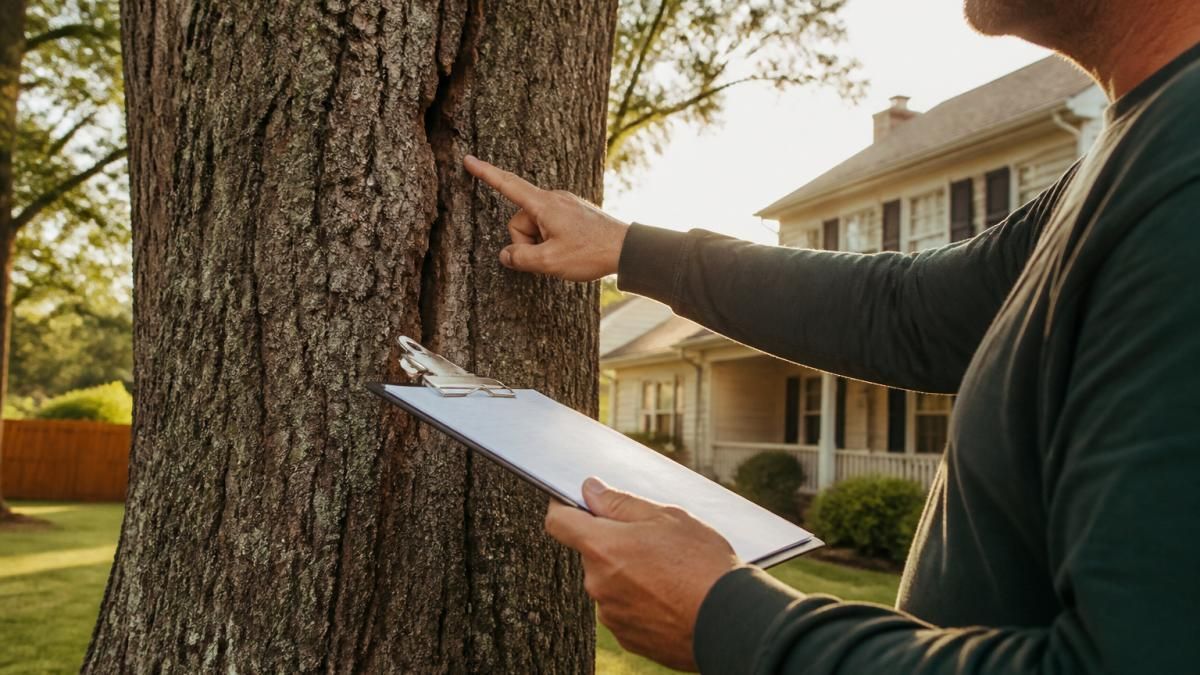
- Deep vertical splits in the trunk signal serious structural failure risk. A split that runs through the full height of the trunk, or one you can slip a finger into, means the wood fibers holding the tree upright are separating.
- Cavities or holes mean decay is already inside the wood. The visible opening is usually smaller than the hollow behind it.
- Sunken areas on the trunk point to internal rot. When the bark dips inward, the wood underneath has lost mass.
- Fruiting bodies , shelf-like fungal growth also called conks, confirm active decay. The conk is the mushroom; the rot is the wood it's feeding on.
- Seams and bulges where the trunk meets a major limb, or where two trunks meet, can indicate included bark, a weak joint that fails under load.
Why the size and location of a defect matter more than the defect itself
A cavity alone isn't a death sentence. But a large cavity combined with a crack, or a hollow that's more than a small portion of the trunk, changes the math fast. Two rules of thumb help:
- Height on the trunk. A defect in the lower third of the trunk is more serious than the same defect higher up, because the lower trunk carries more load and is closer to the root plate.
- Share of the cross-section. A hollow that occupies a large fraction of the trunk's diameter leaves less sound wood to hold the tree up. A professional can measure this; from the ground, a cavity wider than your hand on a mature tree is worth an inspection.
A tree may still stand for years with a defect, or it may fail in the next windstorm. The defect tells you failure is possible. The target tells you whether it matters. A cracked oak in the middle of an open field is a low-priority problem. The same crack on a tree shading a driveway, a play set, or a bedroom window is a call-today problem.
What you can check from the ground
You don't need to climb or probe. Stand back and look for these:
- A crack that is wider at the bottom than the top, or that has fresh wood exposed inside
- A cavity with soft, crumbly wood at its edge
- A conk growing from the trunk, especially near the base
- A seam or bulge at a major limb union
- Sawdust-like frass, which can signal insects working inside the wood
If any of those are present, stop there and call for an inspection. Poking at a cavity or pulling on a loose branch can bring down more than you expect. Our crews assess trunk defects across Anderson and the surrounding Upstate communities, and we'll tell you honestly whether the tree can be managed or needs to come down.
When a Tree Leaning After a Storm Is a Red Flag
A tree leaning after a storm is one of the most urgent signs a tree needs removal, but context decides how urgent.
Ask yourself three questions:
- Was the lean there before the storm? A new lean is far more concerning than an old one.
- Is the soil heaved at the base? Cracked or lifted soil means roots are failing.
- Is the tree over a target? A house, driveway, power line, or play area raises the stakes.
A tree that leans after a storm with exposed or cracked roots should be treated as an emergency. Call for emergency tree services the same day.
Power lines deserve special caution. If a leaning tree is near or touching lines, stay back and call the utility first. Never attempt to handle it yourself.
Emergency Tree Removal After Storm Damage
Emergency tree removal after storm damage is about safety first, cleanup second. When a tree is already down, split, or hanging, the priority is protecting people and property.
Here's what to do right away:
- Keep everyone clear of the tree and its root zone
- Check for downed power lines before approaching
- Document damage with photos for insurance
- Call a professional crew with the equipment for the job
Hanging branches, sometimes called widowmakers, are especially dangerous. They can drop without warning. Don't try to pull them down or cut them from a ladder.
Our crews handle storm damage cleanup across the Upstate, from Anderson to Greenville and Clemson.
Your Repeatable Tree Inspection Checklist
A simple inspection routine catches problems early. The value isn't in the list itself, it's in running the same list in the same order every time, so you notice what changed. Most tree failures give warning signs months or years ahead; the homeowner who inspects on a schedule is the one who sees them.
When to inspect
- Twice a year in calm weather, once in spring as the canopy leafs out, once in late fall after leaf drop, when the trunk and branch structure are easiest to see.
- After every significant storm , even if damage looks minor. Damage high in the canopy is easy to miss from ground level but often signals the next limb to fall.
- Before storm season if you live around mature pines or oaks, which shed limbs under wind and ice load.
- Any time you notice a change , a new lean, a fresh crack, a patch of canopy that thinned.
The order that works: canopy, trunk, root zone
Work top-down and outside-in. That order keeps you from fixating on the first thing you see and missing the rest.
1. Canopy
- Scan the upper canopy for deadwood and hanging branches
- Look for dieback starting at the top or on one side
- Note thinning foliage or a canopy that's noticeably sparser than last season
- Check for branches that cross or rub, which can create wounds
2. Trunk
- Check for cracks, cavities, and sunken areas
- Look for seams, bulges, or included bark at major limb unions
- Note any conks or shelf fungi on the trunk
- Look for frass or sap oozing that wasn't there before
3. Root zone and base
- Look for fungal growth or mushrooms at the base
- Note any new lean or soil heaving at the roots
- Look for exposed or damaged roots
- Check for soft, spongy soil around the root zone
Document it so you can compare
Keep notes and photos so you can track changes over time. A defect that stays the same for years is less worrying than one that's clearly growing. A simple method:
- Photograph the same defect from the same spot each time, and date the file
- Note the width of a crack or cavity in relative terms, "fingernail," "finger," "hand", so you can tell if it's opening
- Record the date of each inspection and any storm that happened since the last one
- Keep the notes with your home records; they help when you call a professional or file an insurance claim
What to do with what you find
Sort findings into three buckets:
- Monitor , a stable, shallow defect with no target nearby. Re-check at the next scheduled inspection.
- Schedule an inspection , a deep crack, a cavity, a conk, a new lean, or any defect over a driveway, walkway, or structure. Get a professional assessment before the next storm season.
- Act now , a fresh crack at the base, soil heaving, a sudden dramatic lean, or a hanging limb over a target. Keep people and pets clear and call for emergency service the same day.
This documentation also helps when you call a professional. Photos and dates let an arborist see the rate of change, which is often more telling than a single snapshot. If you'd rather have trained eyes run the checklist, our family-owned team has served the area since 2008 and can inspect your trees and give you a straight answer on what needs to happen next.
When to Call a Professional for Tree Removal
Some signs a tree needs removal are clear enough to act on alone. Others need a trained eye. Call a professional arborist when you see any of these:
- Deep cracks or large cavities in the trunk
- Fungal growth or soft wood at the base
- A sudden new lean, especially after a storm
- Dead branches hanging over a structure
- Roots that are damaged, exposed, or girdling
- A tree that's clearly in decline
We recommend an inspection whenever you're unsure. Many homeowners worry about being upsold on removal when trimming would work. A good crew will tell you the truth.
At Arbortech of Anderson, our family-owned team has served the area since 2008. We assess tree health honestly and only recommend removal when the tree truly poses a risk. Contact us for an estimate and peace of mind.
Conclusion
Trees don't always announce their failure. Sometimes the warning is a crack you can barely see, or a lean that changes overnight. Knowing the signs a tree needs removal, and acting on the serious ones, protects your home, your family, and your neighbors.
If you spot something that worries you, don't wait for the next storm to confirm it. Reach out to Arbortech of Anderson for a professional tree inspection.
Frequently Asked Questions
How do I know if a tree needs to be removed rather than just trimmed?
A tree needs removal when it has structural defects that trimming cannot fix, such as large trunk cracks, extensive root rot, or a hollow trunk. Trimming is appropriate for healthy trees that need shaping or clearance. If more than half the canopy is dead or the tree is leaning dangerously, removal is usually the safer choice. A professional arborist can assess the tree and give you an honest recommendation.
What are the signs of root rot in a tree?
Look for mushrooms or fungal growth at the base, soft or spongy soil, exposed roots that feel mushy, and a thinning canopy. Root rot weakens the tree's anchor, making it more likely to fall in a storm. If you see these signs, avoid parking or sitting under the tree and call a professional for an assessment.
Can a leaning tree be saved after a storm?
A tree that was already leaning slightly and remains stable may be fine, but a new lean after a storm often signals root damage or soil failure. If the lean is sudden, the soil is cracked or raised on one side, or the tree is near a structure, it is a hazard. Do not try to straighten it yourself; call an emergency tree service to evaluate and remove it if necessary.