Last Updated: October 20, 2026
What a Professional Tree Health Assessment Actually Covers
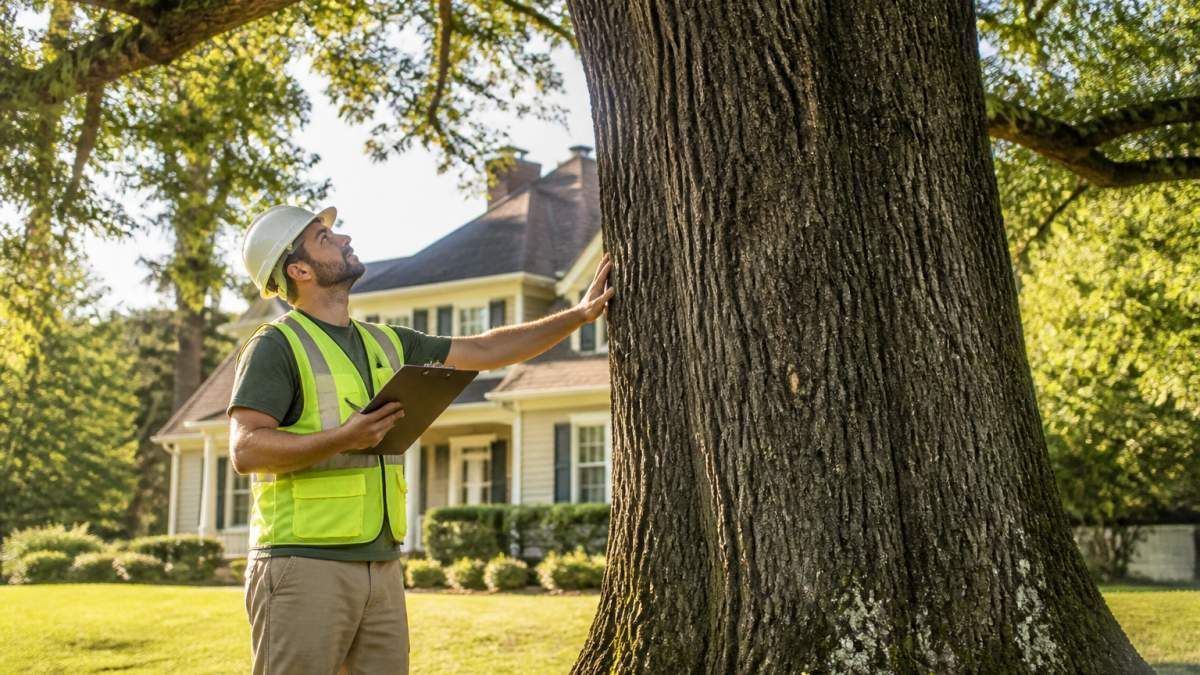
A professional tree health assessment is a hands-on inspection of a tree's structure, canopy, trunk, and root zone, done to judge its condition and the risk it poses.
So what happens during an assessment? An inspector walks the property and checks each tree from the ground up:
- Trunk for cracks, cavities, and soft wood
- Canopy for dead limbs, thin spots, and odd growth
- Root flare for fungus, soil heaving, or buried roots
- Lean and balance against nearby structures
- Site conditions like soil, drainage, and past damage
The result is a clear picture of which trees are healthy, which need work, and which are a hazard. That picture is what you act on.
Signs of an Unhealthy Tree You Should Not Ignore
Some tree problems announce themselves. Others stay quiet until a storm does the talking. These are the signs of an unhealthy tree we tell every homeowner to watch for:
- Mushrooms or conks growing at the base
- A hollow or soft spot in the trunk
- Dead branches in the upper canopy
- Bark peeling or cracking on one side
- Sudden lean that wasn't there last season
- Sparse leaves in the middle of summer
- Cracks where two trunks meet
One sign alone may be minor. Two or three together usually means the tree needs a closer look. A common mistake is waiting for a limb to drop before calling anyone. By then, the damage is already underway.
How a Tree Risk Assessment Prevents Costly Property Damage
A tree risk assessment answers one question: what is the chance this tree fails, and what would it hit? That second part matters as much as the first. A dying tree in an open back field is a nuisance. The same tree leaning over a garage, fence, or driveway is a real threat to your property.
Risk assessments look at three things:
- The tree - its health, structure, and species
- The target - what sits under or near it
- The odds - how likely failure is, and how soon
When all three line up, removal or heavy pruning makes sense. When the target is empty ground, monitoring may be enough. This is how you avoid paying for work you don't need, and how you catch the work you do need before a storm makes the decision for you.
The decision most homeowners actually face
Most people don't call because they want a report. They call because a tree is leaning, dropping limbs, or has a crack they can't stop staring at. The useful question is not "is this tree sick?" but "is this an urgent safety issue, a maintenance item, or something my insurance may treat as a covered loss?" Those are three different answers, and they lead to three different next steps.
- Urgent safety issue. A fresh lean after rain or wind, a split trunk, a hanging limb over a roof, or roots lifting out of the soil. Keep people and vehicles clear, and get a professional out to look before the next storm. Do not wait on an insurance decision to make the tree safe.
- Maintenance item. Dead wood in the canopy, thinning, or a slow lean that has been there for years. This is scheduled work, not an emergency, and it is generally treated as routine upkeep rather than a claim.
- Possible covered loss. Damage that already happened, a limb through a roof, a tree on a fence, or a storm-toppled tree blocking a driveway. This is when documentation and a call to your insurer come first, alongside making the property safe.
What to do before a tree falls
The cheapest outcome is always the one where the tree never comes down on anything. A risk assessment lets you act on that window. In practice, that means:
- Getting a written opinion on any tree within striking distance of a structure, driveway, or power line
- Scheduling removal or pruning while the ground is dry and access is easy
- Keeping a dated record of the assessment and any work performed
- Re-checking flagged trees after every major storm
How this connects to insurance
Here is the part most homeowners learn too late: many policies treat storm-caused damage differently from damage caused by a tree that was already known to be failing. A tree that was visibly dead, cracked, or leaning for months and then comes down in a calm wind is a very different conversation than one that was healthy until a storm took it.
Coverage still depends on your specific policy, the cause of the loss, and whether a covered structure was damaged. A risk assessment does not guarantee a claim outcome. If a tree is already down or damaged, our emergency tree services crews can make the property safe while you sort out the next steps.
When to Prune Trees: Timing Advice That Comes From an Assessment
Knowing when to prune trees starts with knowing what the tree needs. An assessment tells you that. The right timing then depends on species, season, and the reason for the cut.
Here's the general rule we follow:
| Situation | Best Timing | Why It Matters |
|---|---|---|
| Dead or broken limbs | Any time | Removes a hazard right away |
| Structural pruning | Late winter | Clear view, fast healing |
| Storm damage cleanup | Immediately | Prevents further tearing |
| Heavy pruning before storms | Before the season | Reduces wind catch |
| Flowering trees | After bloom | Protects next year's flowers |
Pruning at the wrong time can stress a tree or invite pests. Pruning too little leaves weak limbs in place. An assessment removes the guesswork and gives you a schedule you can actually follow.
Tree Maintenance Best Practices After an Assessment
An assessment is only useful if you act on it. These tree maintenance best practices keep the findings from going stale:
- Schedule follow-up inspections for flagged trees
- Keep a simple written record of what was found and when
- Remove dead wood before storm season
- Watch the root zone for new construction, digging, or soil changes
- Water young or stressed trees during dry spells
- Clear mulch away from the trunk base
- Recheck leaning trees after every major storm
Trees change slowly, then all at once. Small checks now save big bills later.
The Benefits of a Tree Health Assessment for Anderson Property Owners
The biggest benefit of a tree health assessment is simple: you make decisions from facts, not fear. That matters on Upstate lots where tall pines and hardwoods sit close to homes, driveways, and power lines. Our region sees strong storms, and a hazard caught early is a repair bill avoided.
For local owners, the benefits stack up fast:
- Fewer surprise failures during storm season
- Smarter spending on trimming and removal
- Safer yards for kids, pets, and guests
- Healthier trees that live longer and look better
- A paper trail that helps with insurance questions
That last point deserves more attention than it usually gets. Most articles about tree health stop at "healthy trees are nice." The real value of an assessment shows up in two places homeowners rarely think about until it's too late: the insurance conversation and the maintenance record.
The documentation benefit competitors skip
When a tree comes down and a claim is involved, the questions an insurer tends to ask are about condition and care. Was the tree maintained? Did the owner know about a problem? Was anything done about it? A professional assessment gives you dated answers to those questions.
A useful record includes:
- The date of the inspection and who performed it
- Which trees were flagged, and why
- What was recommended, removal, pruning, monitoring, or no action
- Dated photos showing the tree's condition at the time
- Receipts or invoices for any work that was completed
None of this promises a claim will be paid. Coverage depends on your policy, the cause of the loss, and whether a covered structure was damaged. What the record does is show a pattern of reasonable maintenance, and that pattern is often what separates a straightforward conversation from a disputed one.
The routine-trimming reality
One point worth stating plainly, because it surprises a lot of homeowners: routine or preventive trimming is generally not covered by homeowners insurance. Policies are built to respond to sudden, accidental damage from a covered peril, not to scheduled upkeep. So if your goal is to keep branches off the roof before storm season, plan on that being your responsibility. The assessment is what tells you which trimming is actually necessary, so you're not paying for work the trees don't need.
Claim steps and timing after a tree falls
If a tree does come down, the order of operations matters:
- Protect people and property first. Keep everyone clear of the tree and any damaged structure. Do not attempt to move a tree resting on a power line.
- Contact your insurer early. Report the loss and ask what documentation they want before removal begins, when it's safe to wait.
- Document before cleanup. Take dated photos and video of the tree, the damage, and the surrounding area from multiple angles.
- Arrange safe removal. If the tree is blocking access, on a structure, or creating a hazard, removal may need to happen before the claim is settled. Keep all receipts.
- Keep the paper trail. Inspection reports, photos, and invoices all belong in the same file.
Coverage varies, read your policy
Limits, covered perils, and responsibility for debris removal can vary significantly by policy and by state. Before storm season, it's worth reading the sections of your policy that address trees, fallen objects, debris removal, and exclusions for lack of maintenance. If something is unclear, ask your agent directly. A professional assessment complements that policy review, it doesn't replace it.
If a tree does come down, our emergency tree services and storm damage cleanup crews are ready. For more on preparing your trees ahead of severe weather, see guidance from the National Weather Service on severe thunderstorm safety and the Arbor Day Foundation's tree care resources. The Insurance Information Institute's homeowner guidance on fallen trees also explains how damage claims usually work.
Frequently Asked Questions
What does a professional tree health assessment include?
A professional tree health assessment usually starts with a visual inspection of the whole tree: trunk, bark, root flare, canopy, and branch structure. The assessor looks for decay, cracks, included bark, dead wood, pest damage, and signs of root problems. From there, they check how the tree sits relative to your home, driveway, fence, or power lines, and they ask about soil, drainage, and recent storm exposure. You should leave with a plain-language summary of the tree's condition, a risk rating, and specific recommendations for pruning, monitoring, or removal.
How can you tell if a tree is unhealthy?
Common signs of an unhealthy tree include thinning canopy, dead branches in the upper crown, mushrooms or conks on the trunk, cavities, bark peeling in sheets, and cracks where the trunk splits. A leaning tree that was not leaning before, or soil heaving at the base, is a serious warning. Look for sawdust-like frass, sap oozing, or small holes that suggest insects. Some species show stress differently, so a tree risk assessment from a professional is the safest way to confirm what you are seeing.
Can a tree health assessment identify safety risks?
Yes. A tree risk assessment is specifically designed to identify hazards before they fail. The assessor looks at the likelihood of failure, the size of the part at risk, and what it would hit, such as a roof, garage, fence, or driveway. That combination determines whether the tree needs removal, pruning, cabling, or simply monitoring. For trees near a home or in a high-traffic part of the yard, this is the most reliable way to decide between trimming and removal.
How often should mature trees be inspected?
Most mature trees benefit from an inspection every one to three years, depending on species, age, and site conditions. Trees with known defects, recent storm damage, or construction activity nearby should be checked more often. After a major wind or hail event in the Upstate, a follow-up walk-through is smart even if nothing looks wrong from the ground. Regular inspections build a maintenance record, which helps you spot changes over time and make better decisions about pruning and removal.